Depression: An Integrative Approach (2026-2028)
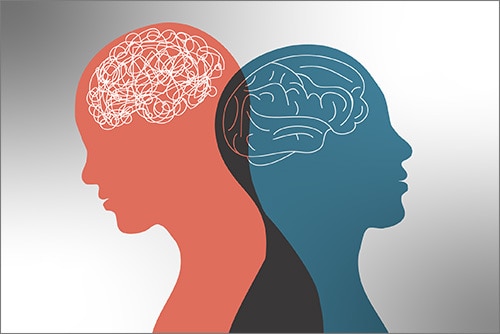
Overview
Build on your integrative knowledge, in this course focused on addressing patients with depression. According to the Centers for Disease Control (CDC), in 2020, one in five adults in the US reported a diagnosis of depression by their health provider. Depression is a major contributor to morbidity, mortality, and economic cost. It cuts across socioeconomic boundaries, race, age, and gender and is associated with serious comorbidities such as cardiovascular disease, obesity, chronic pain, diabetes, and substance abuse.
Within conventional practice, the combined use of antidepressant medications and psychotherapy has been considered the standard recommendation for the treatment of all patients with major depressive disorder (MDD). Increasingly, however, the reliance on medications has been questioned in the scientific literature.
Needs Assessment
For patients to have access to safe and evidence-based integrative approaches, a shift in focus and priorities of funding within the society as a whole are needed. Given the significant impact of depression on patients' lives, safer and more efficacious therapeutic approaches to depression are urgently needed, a fact that has lent momentum to the development of integrative approaches to this complex illness. Expand your ability to support your patients with an integrative approach to depression.
Learning Objectives
Participants will be able to:
- Describe the public health impact of depression, including suicide rates and disparities across age, gender, race, and geographic location.
- Discuss concerns related to medication-focused treatment of depression.
- Review etiological factors for depression.
- Identify symptoms of depression.
- List medical problems and disease states known to cause or are associated with depression.
- Identify medications with depression as potential adverse effects.
- Review conventional treatment approaches for depression.
- Assess the evidence for the safety and benefit of complementary and integrative approaches/practices in the treatment of depression.
- Assess the evidence for the safety and benefit of supplements and botanicals in the treatment of depression.
- Assess the evidence for the effects of lifestyle factors on depression.
- Apply and review integrative medicine approaches in a variety of patient cases with depression.
Target Audience
This activity is intended for physicians, nurse practitioners, nurses, physician assistants, psychologists, and behavioral health professionals in any specialty. In addition, all healthcare professionals who have an interest in an integrative approach to healing are targeted.
Curriculum
- Overview
- Treatment Approaches
- Lifestyle Factors
- Botanical and Dietary Supplements
- Mind-Body Techniques
- Other Integrative Approaches
- Clinical Application
- Course Exam
Completion Requirements
Complete all the coursework, course evaluation, and the final test with a score of 70% or better. Upon successful completion, you will be able to print your certificate of completion.
Depression: An Integrative Approach (2026-2028)
Disclosure & Education Credit Info

Physicians
ACCME/AMA PRA Accreditation and CME Designation Statement
The University of Arizona College of Medicine — Tucson is accredited by the Accreditation Council for Continuing Medical Education (ACCME) to provide continuing medical education for physicians.
The University of Arizona College of Medicine — Tucson designates this enduring material for a maximum of 7.75 AMA PRA Category 1 Credit(s) ™. Physicians should claim only the credit commensurate with the extent of their participation in the activity.
Current CME Approval Period: May 6, 2026–May 5, 2028
Most Recent Review: January 30, 2026
Nurses
Nursing Continuing Professional Development Information
This nursing continuing professional development activity was approved by the Colorado Nurses Association, an accredited approver by the American Nurses Credentialing Center's Commission on Accreditation.
7.75 NCPD Contact Hours for RNs
Current Approval Period: May 6, 2026–May 5, 2028
Completion Requirements
Complete all the coursework, course evaluation, and the final test with a score of 70% or better. You are allowed unlimited re-attempts. Upon successful completion, you will be able to print your certificate of completion.
Relevant Financial Relationship Disclosure Information
University of Arizona College of Medicine – Tucson Continuing Medical Education adheres to the ACCME's Standards for Integrity and Independence in Accredited Continuing Education. Any individuals in a position to control the content of a CME activity, including faculty, planners, reviewers, or others, are required to disclose all financial relationships with ineligible companies (commercial interests). The CME office reviewers have nothing to disclose. All relevant financial relationships have been mitigated prior to the commencement of the activity.
Dr. Lee has disclosed: Stocks or stock options, excluding diversified mutual funds-Mindmed (Relationship has ended)|Stocks or stock options, excluding diversified mutual funds-Compass Pathways (Relationship has ended)|Stocks or stock options, excluding diversified mutual funds-Cybin (Relationship has ended).
Dr. Raison has disclosed: Paid consultant-Novartis Corporation Pharmaceuticals (Relationship has ended)|Paid consultant-Otsuka|Paid consultant-Usona Institute|Paid consultant-AbbVie (Any division).
All other faculty, CME Planning Committee Members, and the CME Office Reviewers have disclosed that they have no relevant financial relationships with ineligible companies that would constitute a conflict of interest concerning this CME activity.
Commercial Support
There is no commercial support for this activity.
Faculty / Authors
Allison Lee, MD; Owner, Private Practice - C. Allison Lee, M.D.
Noshene Ranjbar, MD; Medical Director, Integrative Psychiatry Clinic, Banner-UA Tucson; Medical Director, Child and Adolescent Psychiatry Clinic, Banner-UA Tucson; Co-Director of Integrative Medicine in Residency-Psychiatry, Department of Psychiatry, University of Arizona. Faculty, Center for Mind-Body Medicine; Faculty, Andrew Weil Center for Integrative Medicine.
Charles Raison, MD; Professor, Department of Psychiatry, School of Medicine and Public Health: University of Wisconsin-Madison.
Planning Committee
Ann Marie Chiasson, MD, MPH, ABOIM; Director of Education and the Fellowship, University of Arizona Center for Integrative Medicine.
Priscilla Abercrombie, RN, PhD; Women's Health & Healing Integrative Health Coach.
Copyright
All rights reserved — Arizona Board of Regents.